
The global digital bank Revolut is often cited as a reference case for how a startup can grow from a coworking desk into a multinational company while retaining flexible workspace as a core part of its operating model. From its earliest days to its current global scale in 2026, coworking has played a continuous role in how Revolut builds teams, manages real estate and structures work.
The company was founded in 2014 by Nik Storonsky and Vlad Yatsenko at Level39, a fintech-focused incubator and coworking space in Canary Wharf, London. Revolut began with two desks inside the building, choosing Level39 for its sector specialisation and access to mentors, investors and industry peers. As funding rounds followed, the company gradually expanded within the same building, occupying more space over time before becoming one of Level39’s most prominent alumni.
Following the pandemic, Revolut adjusted its real estate strategy and in 2021 introduced “RevLabs,” a workplace model built around flexible collaboration rather than assigned desks. Under this approach, offices were redesigned so that a majority of space was dedicated to meetings, workshops and team collaboration, with individual desk work expected to take place remotely when needed.
To support rapid international growth, Revolut increased its use of coworking operators rather than relying exclusively on leased offices. The company entered into arrangements with providers including WeWork in cities such as Dallas, Berlin, Dublin, Melbourne and New York. In the same period, Revolut became the first large corporate client to pay for a WeWork office subscription in Dallas using Bitcoin.
By 2025 and 2026, coworking had become embedded in Revolut’s hybrid work policy. The company operates under a permanent “work from anywhere” framework that allows employees to work outside their home country for up to 120 days per year. To support this, Revolut uses flexible office networks to provide on-demand workspaces for employees in locations where it does not operate a formal office. In some cities, coworking providers also host permanent teams, such as Revolut’s technology hub in Barcelona, which is based at Aticco, a local coworking operator.
Coworking has also been extended beyond internal operations. Revolut now includes access to WeWork locations as a customer benefit for subscribers to its Metal and Ultra plans, positioning workspace access alongside services such as travel insurance and airport lounge entry.
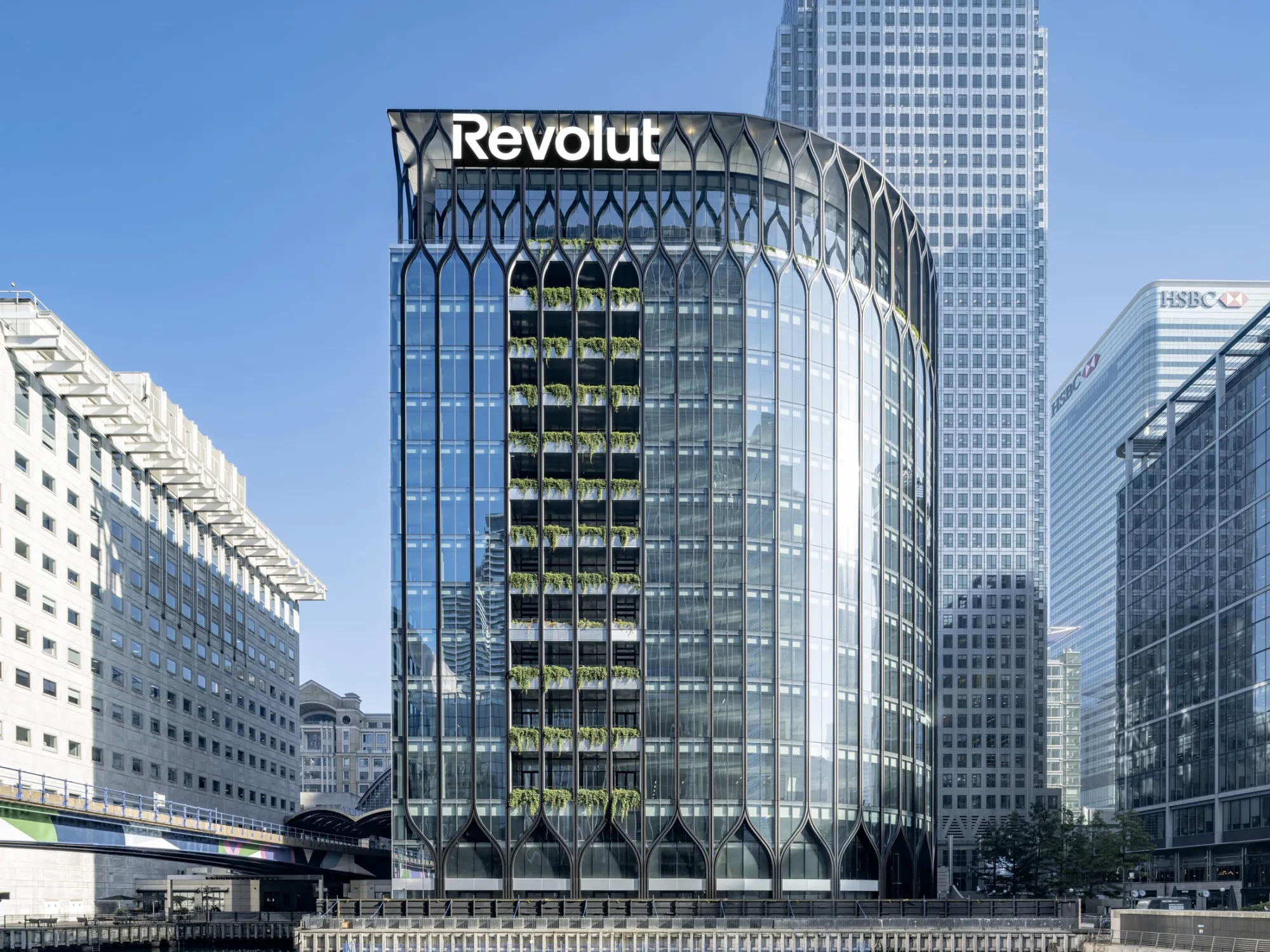
In parallel with this flexible approach, Revolut opened a new global headquarters at YY London in Canary Wharf in 2025, designed to accommodate more than 10,000 employees. The company has stated that the site functions primarily as a collaboration hub rather than a mandatory daily workplace, with coworking partners continuing to play a role in supporting local teams and regional operations.
From its founding desks at Level39 to its global hybrid model, Revolut’s use of coworking illustrates how flexible workspace has remained part of the company’s structure as it scaled from a startup to a multinational fintech.
Revolut reports more than 65 million customers worldwide and has continued to grow its user base as it enters new markets. Paid plans are a key part of its business model, generating recurring subscription revenue alongside transaction and service fees.